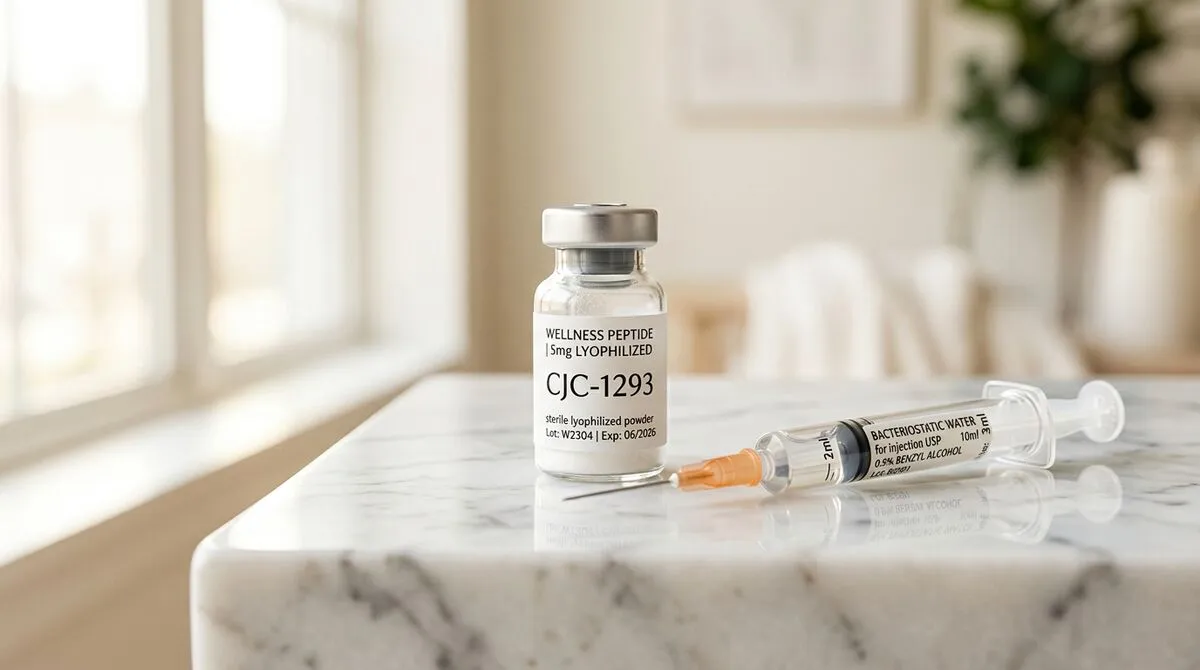
⏱️ Reading time: ~18 min
Most peptide degradation happens before a single dose is prepared — not during storage, not during shipping, but in those first minutes of reconstitution where a careless technique destroys the structure you paid for. A 2019 analysis of lyophilized peptide stability found that mechanical shear from aggressive vortexing can cause up to 30% aggregation in fragile sequences within 60 seconds. Thirty percent. Gone, before the experiment starts.
At UNIK LAB, we've spent considerable time analysing where reconstitution goes wrong in research settings, and the pattern is consistent: not a lack of care, but a lack of a precise protocol. This guide fixes that.
What Peptide Reconstitution Actually Is
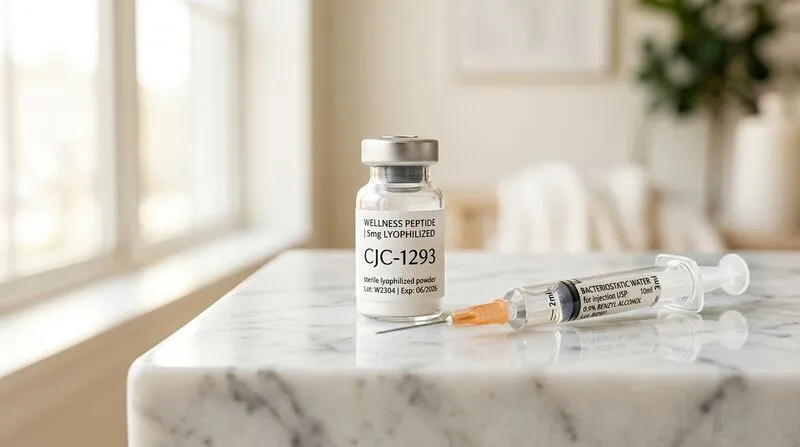
Lyophilised peptides arrive as a dry powder or cake — the result of freeze-drying a liquid peptide solution to remove water while preserving molecular structure. Reconstitution is the process of reintroducing a solvent (almost always bacteriostatic water or sterile water) to return the peptide to a stable liquid solution ready for research use.
The goal is not just “dissolve powder in water.” The goal is to achieve complete dissolution at a known, precise concentration, without introducing contaminants, without denaturing the peptide through heat or mechanical stress, and with a solvent that preserves stability for the required research window.
Three variables determine whether your reconstitution succeeds or fails:
- Solvent choice — bacteriostatic water, sterile water, or dilute acetic acid, depending on peptide chemistry
- Volume added — determines final concentration and therefore dose precision
- Technique — how and where the solvent contacts the powder matters more than most researchers assume
Equipment Checklist Before You Start
Preparation is not a formality. Having the wrong syringe gauge, a contaminated swab, or the wrong solvent on hand mid-process introduces unnecessary variables. Assemble everything before uncapping a single vial.
Essential Equipment
- Bacteriostatic water — the primary solvent for the vast majority of research peptides
- Insulin syringes — 1ml capacity with 27–31 gauge needles
- Alcohol swabs — 70% isopropyl alcohol
- Clean, flat work surface — away from airflow
- Refrigerator access — for immediate post-reconstitution storage
Optional but Recommended
- Parafilm or vial caps — secondary sealing for long-term storage vials
- Label tape and marker — date, concentration, peptide name. Non-negotiable for rigorous research records.
- Sterile dilute acetic acid (0.1%) — required for certain peptides including GHRPs
Bacteriostatic Water vs Sterile Water: Which One?
Bacteriostatic Water (BAC Water)
BAC water contains 0.9% benzyl alcohol. That single addition transforms a single-use solvent into one that resists microbial growth for up to 28 days after first penetration of the septum. For research protocols that require multiple draws from the same reconstituted vial over days or weeks, BAC water is not a preference — it's a requirement.
Use BAC water for: Most research peptides including BPC-157, TB-500, CJC-1295, Ipamorelin, Epithalon, and any peptide where the reconstituted vial will be accessed more than once.
Sterile Water for Injection (SWFI)
Sterile water carries no preservative. Use sterile water only when the entire reconstituted volume will be used in a single research session.
Use sterile water for: Single-use preparations, or research protocols requiring benzyl alcohol-free conditions.
Dilute Acetic Acid (0.1%)
Certain peptides — particularly growth hormone secretagogues including GHRP-6, GHRP-2, and Hexarelin — require dilute acetic acid (0.1% in sterile water) for initial dissolution. Once dissolved, dilute with BAC water to reach working concentration.
Step-by-Step Reconstitution Protocol
- Prepare the workspace. Wipe the surface with 70% IPA. Let it dry.
- Calculate your target volume. Before drawing any solvent, decide: how many milligrams of peptide are in the vial, and what final concentration do you need?
- Swab the bacteriostatic water vial septum. Wait 15–20 seconds for the alcohol to evaporate.
- Draw the calculated volume of BAC water. Using a fresh insulin syringe, withdraw the precise volume required.
- Swab the peptide vial septum. New alcohol swab. Same 15–20 second dwell time.
- Inject the solvent against the glass wall — not directly onto the powder. Direct the stream of BAC water to run down the inner glass wall rather than hitting the lyophilised cake directly.
- Do not vortex. Swirl gently. Invert the vial 3–5 times. If powder remains undissolved after 60 seconds of gentle rotation, place the vial in a refrigerator for 10–15 minutes, then return and swirl again.
- Inspect the solution. A properly reconstituted peptide solution is clear and colourless (or faintly yellow for some peptides). Cloudiness indicates incomplete dissolution or aggregation.
- Label the vial immediately. Peptide name, total mg, volume added, resulting concentration, date of reconstitution.
- Store at 2–8°C immediately. Reconstituted peptides go in the refrigerator within minutes of reconstitution.
Volume & Concentration Calculations
The Core Formula
Volume to add (ml) = Peptide mass (mg) ÷ Desired concentration (mg/ml)
Example: A 5mg vial of BPC-157. Target concentration: 1mg/ml. → Add 5ml of BAC water. Each 0.01ml (1 IU on an insulin syringe) = 0.01mg = 10mcg.
Converting to Insulin Syringe Units
Most researchers use U-100 insulin syringes (1ml = 100 units).
IU per dose = (Desired dose in mcg ÷ Concentration in mcg/ml) × 100
Worked example: BPC-157 at 250mcg per dose. Vial reconstituted at 1mg/ml = 1000mcg/ml. → IU needed = (250 ÷ 1000) × 100 = 25 IU.
Storage After Reconstitution
Refrigerated Storage (2–8°C)
Standard working storage. Reconstituted peptides in bacteriostatic water maintain usable integrity for 28–30 days at refrigerator temperature when stored in the original sealed vial.
Freezer Storage (−20°C)
For peptides that won't be used within the 28-day refrigerator window, −20°C freezer storage can extend viability to 3–6 months. Freeze-thaw each individual aliquot only once.
Protecting Against Light and Oxidation
Several peptides — particularly those containing tryptophan, methionine, or cysteine residues — are photosensitive. Store away from direct light even during refrigerator storage.
7 Mistakes That Degrade Peptide Integrity
1. Injecting Solvent Directly Onto the Powder
Direct-impact injection causes foam and mechanical denaturation. The wall-directed technique costs nothing and prevents a meaningful degradation mechanism.
2. Vortexing
Vortexing generates shear forces that fragment peptide chains and promote aggregation. Gentle swirling achieves the same mixing result without the molecular damage.
3. Using the Wrong Solvent
Not all peptides dissolve cleanly in BAC water. Know your peptide's solubility profile before reconstituting.
4. Reconstituting and Leaving at Room Temperature
Even 2–3 hours at 20–22°C causes measurable oxidation and microbial growth risk. The vial goes into the refrigerator within minutes.
5. Not Labelling
A reconstituted vial without a concentration label is a liability in any research context. Label everything, every time.
6. Using Expired BAC Water
After 28 days from first puncture, discard and use a fresh vial.
7. Freeze-Thaw Cycling
Aliquot before freezing. Thaw once per aliquot.
Peptide-Specific Reconstitution Protocols
BPC-157 Reconstitution
BPC-157 dissolves well in bacteriostatic water at standard conditions with no special preparation required. A 5mg vial reconstituted with 2ml BAC water gives a 2.5mg/ml working solution. Contains a methionine residue at position 12 susceptible to oxidation — amber vials or foil-wrapped storage at 4°C recommended.
TB-500 (Thymosin Beta-4) Reconstitution
TB-500 is a 43-amino acid peptide. At higher concentrations, it can appear slightly viscous — this is normal. Allow up to 15 minutes of gentle rotation before checking for complete dissolution. Sensitive to freeze-thaw cycles — aliquot into single-use volumes before freezing.
Growth Hormone Releasing Peptides (GHRP Series)
GHRP-2, GHRP-6, and Hexarelin resist clean dissolution in neutral aqueous solvents. If producing a milky suspension, use this protocol: (1) Add 0.1–0.2ml of 0.1% acetic acid and swirl until dissolved. (2) Add remaining volume as BAC water to reach target concentration.
Frequently Asked Questions
What is the best solvent for reconstituting research peptides?
Bacteriostatic water (BAC water) is the standard solvent for the vast majority of research peptides. It contains 0.9% benzyl alcohol, which prevents microbial contamination for up to 28 days after first use. Sterile water is appropriate for single-use preparations only. Some peptides — particularly GHRP-2 and GHRP-6 — require initial dissolution in dilute acetic acid (0.1%) before dilution with BAC water.
How long does reconstituted peptide remain stable?
Reconstituted peptides in bacteriostatic water stored at 2–8°C typically maintain research-grade stability for 28–30 days. At −20°C, stability extends to 3–6 months depending on the specific peptide sequence, provided freeze-thaw cycles are kept to once per aliquot.
Why does my peptide solution look cloudy after reconstitution?
Cloudiness typically indicates incomplete dissolution, aggregation from incorrect solvent pH, or physical denaturation from aggressive agitation. If cloudy after 15 minutes of gentle rotation, the most likely cause is a solvent mismatch — peptides with high isoelectric points require dilute acetic acid rather than neutral aqueous solvents.
How do I calculate the dose in IU from a reconstituted peptide vial?
Using a U-100 insulin syringe (1ml = 100 IU): divide your desired dose in mcg by the concentration in mcg/ml, then multiply by 100. Example: 250mcg dose from a 1mg/ml solution = (250 ÷ 1000) × 100 = 25 IU.
Does freeze-thaw cycling damage reconstituted peptides?
Yes. Repeated freeze-thaw cycles cause ice crystal formation that exerts mechanical stress on peptide chains, promoting aggregation. Best practice: aliquot the reconstituted solution into single-use volumes before freezing, then thaw each aliquot once.
Available from UNIK LAB
Bacteriostatic Water 3ml€9
Research-grade Bacteriostatic Water 3ml · HPLC verified ≥98% · COA included · 48h EU/UK dispatch