
990,000 monthly visitors. Gone overnight. When Peptide Sciences shuttered in March 2026, it didn't just close a website — it displaced the single largest audience of research peptide buyers in the English-speaking world. Forums lit up. Inboxes flooded. Orders in transit were cancelled without refund.
If you're reading this, you're probably one of those researchers trying to figure out what comes next. This guide cuts through the noise: why Peptide Sciences closed, what actually matters when evaluating a replacement supplier, and a transparent comparison of the credible alternatives currently operating in 2026 — including their weaknesses, not just their selling points.
Contents
Why Peptide Sciences Closed
Quick answer: Peptide Sciences ceased operations in March 2026 following sustained regulatory pressure from US federal agencies on the domestic research peptide distribution market. The closure was abrupt — no formal wind-down, no customer notice period. Pending orders were cancelled.
Peptide Sciences operated for over a decade as the dominant US-based supplier of research-grade peptides. At its peak, it served an estimated 990,000 unique monthly visitors, a figure that dwarfed most competitors combined. That scale made it both indispensable to researchers and an obvious target for regulatory attention.
The FDA has been progressively tightening its position on certain classes of compounds — particularly those that straddle the line between legitimate research reagents and unapproved active substances. Several import alerts and warning letters circulated within the sector from 2024 onward. Peptide Sciences wasn't alone in receiving scrutiny; it was simply the largest operation in the crosshairs.
The Broader Regulatory Context
What happened to Peptide Sciences is part of a pattern. The FDA's enforcement strategy for research chemicals and peptides has shifted from reactive (responding to individual adverse event reports) to proactive (targeting supply chains at source). This mirrors what happened with SARMs suppliers between 2019 and 2022, where the largest operators faced federal action first.
The key distinction regulators draw is between compounds sold with explicit research-use-only disclaimers and those marketed — even implicitly — for human application. Suppliers that stayed on the right side of that line have generally continued operating. Those that didn't have found themselves in increasing difficulty.
For researchers, this means two things. First, supplier diversification is no longer optional — concentration risk in a single US-based provider has proven catastrophic. Second, supplier jurisdiction matters more than it used to. European and UK-based suppliers operate under different regulatory frameworks, which changes their risk profile substantially.
What Happened to Pending Orders
Reports from researchers indicate that orders placed in the final weeks of February and early March 2026 were cancelled without fulfilment. Some customers reported partial refunds; others received nothing. The customer service infrastructure appears to have been shut down simultaneously with the storefront.
If you had open orders or account credit with Peptide Sciences, the options for recovery are limited. Chargebacks through credit card providers remain the most reliable route if payment was made within the dispute window.
What Researchers Actually Need From a Supplier
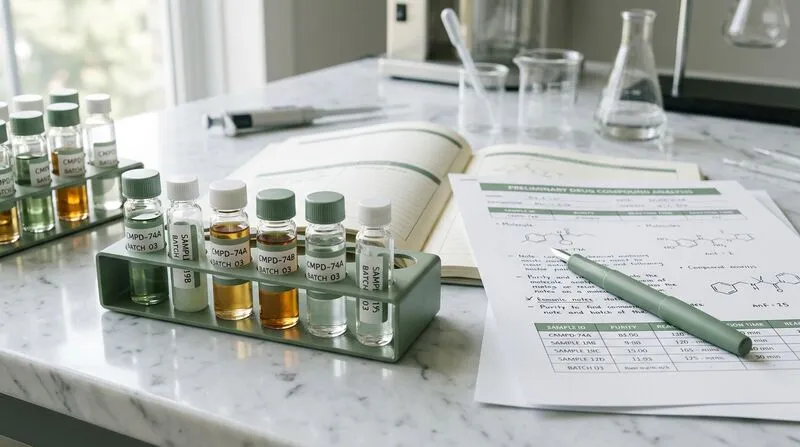
Quick answer: Purity data per batch, independent third-party verification, reliable shipping to your jurisdiction, and a company that actually answers when something goes wrong. Everything else is secondary.
After reviewing hundreds of forum threads, academic discussion boards, and direct researcher feedback following the Peptide Sciences closure, the consensus on what made PS valuable — and what researchers fear losing — clusters around five core requirements.
1. Verified Purity ≥98% HPLC
This is table stakes. Every legitimate supplier claims high purity; the question is whether the claim is substantiated with batch-specific chromatographic data. Generic certificates that don't specify lot numbers, analysis dates, or peak area percentages are not CoAs — they're marketing materials.
Peptide Sciences was relatively transparent on this front. Researchers had come to expect batch-specific HPLC data as standard. Any replacement supplier that doesn't match this baseline should be immediately deprioritised.
2. Mass Spectrometry Confirmation
HPLC confirms purity. Mass spectrometry confirms identity — that the compound in the vial is actually what it says on the label. A peptide can pass HPLC at 99% purity and still be the wrong compound if the synthesis went wrong. MS confirmation eliminates that risk. The two analyses together constitute a complete analytical profile.
3. Third-Party Independent Testing
In-house CoAs are structurally compromised. A supplier testing their own products has an obvious incentive to report favourable results. The gold standard is third-party verification through an independent laboratory — Janoshik being the most widely recognised in this space, operating out of the Czech Republic and routinely cited in academic and research forums.
Janoshik reports include the original sample submission confirmation, analysis methodology, instrument specifications, and full spectral data. They're difficult to fake and easy to cross-reference. If a supplier's CoA doesn't come from an independent laboratory, treat it with appropriate scepticism.
4. Shipping Reliability to Your Jurisdiction
Peptide Sciences' Achilles heel was its US-centric operation. EU and UK researchers frequently reported extended customs delays, seized shipments, and inconsistent delivery timelines. Post-Brexit customs changes compounded this for UK researchers specifically.
Jurisdiction matching matters. A supplier based in your region or with established shipping corridors to your country will almost always outperform a transatlantic option on reliability — regardless of product quality.
5. Catalogue Depth
Peptide Sciences offered one of the most comprehensive catalogues in the market — GH secretagogues, weight management compounds, cognitive peptides, anti-aging research reagents, and more. Few single suppliers match that breadth. Researchers maintaining diverse protocols may need to work with two or three suppliers rather than one, at least initially.
6. Responsive Technical Support
This is probably the most underrated requirement in most supplier reviews. When a batch produces unexpected results, or when a question about storage conditions needs a fast answer, the value of a supplier with actual scientific expertise available is enormous. "Contact form with 72-hour response" is not technical support.
The Evaluation Framework: 6 Non-Negotiables
Quick answer: Score any new supplier against these six criteria before placing an order. If they fail more than two, look elsewhere.
Rather than evaluating suppliers on subjective reputation, the framework below applies objective criteria. Each criterion is binary or scored; the aggregate tells you whether a supplier deserves your research budget.
| Criterion | What to Check | Weight |
|---|---|---|
| HPLC purity ≥98% | Batch-specific chromatogram, not generic claim | Critical |
| Mass spectrometry ID | Molecular weight confirmation per lot | Critical |
| Independent 3rd-party lab | Janoshik or equivalent — verifiable online | Critical |
| Shipping success to your region | Forum reports + supplier transparency | High |
| Catalogue breadth | Covers your active research compounds | Medium |
| Technical support quality | Response time + scientific depth of answers | Medium |
Apply this framework before committing to any new supplier. A company can have excellent branding and a professional website and still fail on all three critical criteria. The criteria above are not opinions — they're the minimum analytical standard that serious research requires.
Supplier Comparison Table (2026)
Quick answer: No single supplier perfectly replicates Peptide Sciences across all dimensions. The table below represents the most accurate comparison available as of April 2026, based on publicly available CoA data, community reporting, and direct verification.
What most comparison reviews fail to mention is that supplier quality is not static. A supplier that received strong reviews in 2024 may have changed ownership, outsourced synthesis, or degraded their QC standards since. The table below reflects the current (April 2026) state, not historical reputation.
| SUPPLIER | HPLC/MS CoA | INDEPENDENT LAB | EU/UK SHIPPING | US SHIPPING | CATALOGUE |
|---|---|---|---|---|---|
| UNIK LAB | ✓ | Janoshik | ✓ Native | ✓ | Growing |
| Limitless Life | ✓ | Janoshik | ◑ Limited | ✓ | Large |
| Amino Asylum | ✓ | Varies | ✗ Unreliable | ✓ | Large |
| Peptide Pros | ◑ Generic | ✗ | ✗ | ✓ | Medium |
| Direct Peptides | ✓ | Janoshik | ✓ Native | ◑ Limited | Medium |
Table compiled April 2026. ✓ = confirmed, ◑ = partial/inconsistent, ✗ = not available or unverified. Based on publicly available CoA data and community-sourced reporting. This table will be updated as conditions change.
The Best Alternatives, Assessed Honestly
Quick answer: Limitless Life Nootropics is the strongest direct US-market alternative for compound breadth. For EU/UK researchers, UNIK LAB and Direct Peptides represent the best combination of analytical rigour and shipping reliability.
Limitless Life Nootropics
Probably the most established of the remaining US-based suppliers. Limitless Life has been operating since the mid-2010s and has built a reputation for consistent HPLC data and responsive customer communication. Their Janoshik partnerships are documented and verifiable. The catalogue is extensive, covering a wide range of secretagogues, cognitive compounds, and anti-aging research reagents.
The weakness: EU and UK shipping is technically available but unreliable in practice. Customs success rates for transatlantic shipments have been inconsistent throughout 2025 and into 2026. For US-based researchers, this is a strong option. For European researchers, it introduces meaningful risk.
Amino Asylum
Amino Asylum has a large and vocal community following, particularly in bodybuilding and performance research forums. The catalogue is broad, pricing is competitive, and turnaround times are fast within the US. The concern is CoA consistency — some batches show excellent third-party data, others revert to in-house testing that's less verifiable. The quality floor appears lower than Limitless Life. For lower-stakes research compounds it may be acceptable; for protocols where purity is critical, the variance is a problem.
Peptide Pros
Honest assessment: Peptide Pros has been riding on historical goodwill for some time. The CoA documentation has deteriorated over the past 18 months — generic, non-batch-specific certificates are now common. Pricing is competitive but the analytical backing doesn't justify use for rigorous research applications. Better for hobbyist or exploratory research than for structured laboratory protocols.
Direct Peptides
A UK-native supplier that has quietly built a solid analytical reputation. Janoshik CoAs are standard, HPLC purity figures consistently exceed 98%, and EU/UK shipping is domestic — meaning faster transit and no customs risk. The catalogue is narrower than Peptide Sciences was at its peak, and customer support can be slow. But for UK and EU researchers who prioritise analytical credibility over catalogue breadth, Direct Peptides is worth serious consideration.
UNIK LAB: What We Offer
Quick answer: UNIK LAB supplies research-grade peptides to UK, EU, and US researchers with Janoshik third-party CoAs per batch, ≥98% HPLC purity, and mass spectrometry identity confirmation. All compounds are strictly for research use only.
We're going to be straightforward about this section: we have an obvious commercial interest in presenting UNIK LAB favourably. So rather than making claims without substance, here's what we can confirm with documentation.
Every compound in the UNIK LAB catalogue ships with a batch-specific Certificate of Analysis from Janoshik Analytical, covering HPLC purity percentage, mass spectrometry molecular weight confirmation, and synthesis date. These are not templated documents — each CoA is specific to the production lot you receive. You can view sample CoA formats here.
Catalogue Coverage
The current UNIK LAB catalogue spans GH secretagogues (including Ipamorelin, CJC-1295, GHRP-6, Sermorelin), anti-aging research peptides (BPC-157, TB-500, Epithalon), metabolic research compounds (AOD-9604, Semaglutide research variants), and cognitive compounds. The catalogue is expanding based on researcher demand — compounds not yet listed can often be sourced on request for established research accounts.
Shipping Infrastructure
UK and EU shipments are domestic or intra-EU — no transatlantic customs exposure. US shipping is available and has maintained strong delivery rates. Packaging is discrete, temperature-appropriate (lyophilised powder compounds are stable at ambient temperature for transit; peptide bacteriostatic water and reconstitution supplies ship separately). Full details are in our research-use-only terms.
For researchers transitioning from Peptide Sciences, the UNIK LAB compound catalogue is the starting point. If you need a compound that isn't currently listed, contact us — the sourcing network extends beyond what's visible on the storefront.
Red Flags to Watch For in New Suppliers
Quick answer: The research peptide market has historically attracted opportunistic suppliers who capitalise on demand spikes. The Peptide Sciences closure will generate several such operators. Know the warning signs before you order.
The closure of a supplier handling nearly a million monthly visitors creates enormous demand displacement. That creates opportunity — both for legitimate businesses scaling up to meet demand, and for opportunistic suppliers who see an influx of inexperienced buyers as a short-term extraction opportunity. Distinguishing between the two requires a specific set of checks.
Non-Batch-Specific CoAs
The single most reliable indicator of a low-quality or fraudulent supplier is a Certificate of Analysis that doesn't specify the batch lot number, analysis date, and instrument used. A certificate that shows "Purity: 99.2%" without identifying the specific production run is analytically meaningless. Any supplier that can't provide batch-specific documentation should be avoided for research use.
Prices Significantly Below Market
Research-grade synthesis, proper QC, third-party testing, and appropriate storage infrastructure all cost money. A supplier offering peptides at 40-50% below market price is either cutting corners somewhere in that chain or operating unsustainably. Neither scenario produces reliable research material.
No Verifiable Independent Laboratory
Check the laboratory named on the CoA. Does it have a verifiable web presence? Can you find the facility's own testing records or submission portal? Janoshik, for example, maintains a publicly accessible database where you can cross-reference sample submission numbers against reported results. If a "third-party lab" doesn't have this, it's not genuinely independent.
Domain Registered After March 2026
Check the WHOIS registration date of any new supplier. Several domains leveraging "peptidesciences" branding or adjacent keywords were registered within days of the closure announcement. These are almost certainly either phishing operations or low-quality opportunists — neither is appropriate for research supply.
Marketing Language Around Human Applications
Legitimate research peptide suppliers don't suggest, imply, or encourage human use of their compounds. If a supplier's website contains dosing protocols, personal testimonials about effects, or language implying human administration, that's both a legal red flag and a credibility indicator. Rigorous research suppliers don't sell that way.
Transitioning Your Research Programme
Quick answer: The most pragmatic transition strategy involves identifying two or three verified suppliers covering your required compounds, ordering small validation batches from each, and establishing relationships before your current stock runs out.
If you had ongoing research protocols dependent on Peptide Sciences supply, the disruption is real and the timeline for finding alternatives matters. Here's a practical transition sequence.
Step 1: Audit Your Current Stock
Before sourcing anything new, assess what you have. Properly stored lyophilised peptides have extended shelf lives — typically 12-24 months at -20°C in sealed vials. Reconstituted peptides have much shorter windows. This audit determines your urgency and sequencing.
Step 2: Identify Compounds by Priority
Separate your active research compounds into critical (ongoing protocols that can't be paused) and secondary (compounds used for exploratory or lower-priority research). Source critical compounds first, from the highest-quality supplier you can verify. Secondary compounds can wait for catalogue availability to settle.
Step 3: Order Validation Batches
Don't commit your full research budget to a new supplier without validation. Order a small batch, run your own analytical checks if you have access to in-house instrumentation, and evaluate the CoA documentation before scaling. This is standard practice when switching any analytical reagent supplier.
Step 4: Establish Supplier Relationships
The Peptide Sciences closure caught researchers off-guard partly because single-supplier dependency is an inherent concentration risk. Going forward, maintaining relationships with two or three verified suppliers is more resilient than relying on any one company — regardless of how established they appear.
The UNIK LAB research catalogue is structured to support exactly this kind of distributed sourcing. We cover a significant portion of what Peptide Sciences offered, and our CoA infrastructure is built for researchers who take analytical standards seriously.
Frequently Asked Questions
Why did Peptide Sciences shut down?
Peptide Sciences ceased operations in March 2026, following sustained regulatory scrutiny from the FDA on research peptide distribution in the US market. The closure was part of a broader enforcement pattern targeting high-volume suppliers of certain compounds. No formal announcement was made; the site went offline without customer notice.
What should I look for in a Peptide Sciences alternative?
Third-party HPLC and mass spectrometry data per batch, independent laboratory verification (Janoshik is the most reliable in this space), proven shipping success rates to your country, a clear research-use-only position, and technical support with actual scientific depth. All six criteria matter; the first three are non-negotiable.
Are there European alternatives to Peptide Sciences?
Yes — and for UK and EU researchers, European-native suppliers now represent the more reliable option. UNIK LAB and Direct Peptides both operate with domestic or intra-EU shipping, Janoshik CoA infrastructure, and no transatlantic customs exposure. Several Scandinavian and German-based suppliers are also operational but with narrower catalogues.
How do I verify purity claims from a new supplier?
Request the batch-specific CoA showing HPLC chromatogram with peak area percentage, mass spectrometry data with observed vs. expected molecular weight, and the testing laboratory name. Cross-reference the lab independently — Janoshik maintains a searchable submission database. If the CoA is generic, undated, or untraceable to a specific production lot, it isn't analytically valid.
Will Peptide Sciences reopen?
As of April 2026, no credible information suggests Peptide Sciences will resume operations. Researchers should proceed on the assumption that the closure is permanent and establish alternative supply chains accordingly.
Is UNIK LAB a direct replacement for Peptide Sciences?
UNIK LAB covers a substantial portion of the Peptide Sciences catalogue — GH secretagogues, anti-aging research compounds, metabolic peptides, and cognitive research reagents. Third-party Janoshik CoAs are standard per batch. Researchers transitioning from Peptide Sciences will find the analytical infrastructure comparable and the EU/UK shipping significantly more reliable.
Research Supply
View the UNIK LAB Catalogue
Research-grade compounds with Janoshik third-party CoA. UK, EU, and US shipping. All for research use only.