HPLC Verified
Purity confirmed by High-Performance Liquid Chromatography at an accredited EU laboratory.

5mg recovery research peptide
TB-500 is a synthetic peptide corresponding to the actin-binding domain of Thymosin β4 (Tβ4), a 43-amino-acid protein originally isolated from thymic tissue. Tβ4 is among the most abundant intracellular proteins in mammalian cells and plays a central role in regulating the actin cytoskeleton — the dynamic structural network that governs cell shape, motility, and division.
Thymosin β4 sequesters globular (G-)actin monomers via its LKKTET actin-binding motif, preventing their polymerisation into filamentous (F-)actin. This dynamic equilibrium between G- and F-actin is fundamental to cell migration, wound contraction, and tissue remodelling. TB-500 retains this core β-thymosin actin-binding sequence, making it a research tool for investigating cytoskeletal regulation in contexts where the full 43-residue protein may be impractical.
Thymosin β4 itself is expressed at high levels in platelets, neutrophils, and macrophages — cells at the forefront of injury responses — and is actively secreted to coordinate local tissue repair. Studies have identified Tβ4 and its fragments in wound fluid, suggesting a paracrine signalling role in addition to the well-characterised intracellular actin-sequestering function.
A key area of Tβ4 and TB-500 research concerns their pro-angiogenic activity. Goldstein and colleagues documented Tβ4-mediated upregulation of VEGF and promotion of endothelial cell migration and tube formation in Matrigel angiogenesis assays. Activation of integrin-linked kinase (ILK) — a downstream effector of integrin-mediated cell-matrix signalling — has been proposed as a key mechanism, with ILK activation in turn promoting Akt survival signalling and endothelial cell viability under ischaemic conditions.
In cardiac biology, the Srivastava group demonstrated in a landmark 2004 Nature paper that Tβ4 activates ILK and promotes cardiac progenitor cell migration into areas of myocardial injury, representing one of the first demonstrations of a peptide-mediated endogenous cardiac repair mechanism.
The preclinical literature on Tβ4 and TB-500 spans musculoskeletal, cardiac, corneal, and dermal wound healing models. Consistent findings include accelerated wound closure, reduced inflammatory cell infiltration, and improved organisation of regenerated tissue architecture relative to controls. Anti-inflammatory properties have been documented in models of acute tissue injury, where Tβ4 administration modulates NF-κB pathway activity and pro-inflammatory cytokine production. TB-500 remains a research compound without regulatory approval for human therapeutic use.
This content is for informational purposes only and reflects the state of preclinical research. It does not constitute medical advice, endorsement of human use, or therapeutic claims of any kind.
Purity confirmed by High-Performance Liquid Chromatography at an accredited EU laboratory.
Every batch meets or exceeds 98% purity. CoA available for verification before dispatch.
Each vial is traceable to its synthesis batch, testing date, and analytical records.
European stock stored at optimal temperature from synthesis to dispatch.
Orders ship from EU stock within 48 hours with discrete, temperature-appropriate packaging.
Certificate of Analysis issued for every batch, available for download on request.
Peer-reviewed research supporting TB-500 investigation.
Comprehensive review of thymosin β4 biology, spanning actin-sequestering function, wound healing activity, angiogenesis promotion, and cardiac repair data. Authors contextualise Tβ4 as a multifunctional repair peptide with diverse tissue targets and propose ILK activation as a unifying mechanistic framework for its pro-reparative effects.
View on PubMedLandmark paper demonstrating that thymosin β4 activates integrin-linked kinase (ILK) and promotes cardiac progenitor cell migration into injured myocardium. The study documents improved cardiac function following Tβ4 administration in a myocardial infarction model, establishing a molecular mechanism for peptide-mediated cardiac repair and providing one of the earliest demonstrations of Tβ4 as a paracrine repair signal.
View on PubMedSystematic review of animal model studies examining thymosin β4 activity across wound healing, corneal repair, skeletal muscle regeneration, and neurological injury models. Authors document consistent pro-reparative effects across tissue types and discuss the translational implications of the preclinical dataset for research into peptide-mediated tissue restoration.
View on PubMedMechanistic investigation of thymosin β4's anti-inflammatory activity in corneal and epithelial cell models. The study demonstrates suppression of TNF-α-induced NF-κB nuclear translocation and downstream cytokine production, providing a molecular basis for the anti-inflammatory phenotype observed in thymosin β4 wound healing studies.
View on PubMedAll studies referenced are independent third-party research. UNIK LAB makes no claims regarding the therapeutic efficacy of any compound and does not represent or endorse the conclusions of cited studies. All referenced research was conducted under controlled laboratory or clinical conditions; results may not be predictive of effects in other experimental contexts.
Answers to the most frequently asked questions about TB-500.
Other Recovery research compounds from our catalogue.
TB-500 corresponds to the LKKTET actin-binding domain of the 43-residue thymosin β4 protein. This β-thymosin motif sequesters G-actin monomers to regulate the G-actin/F-actin equilibrium that governs cell morphology, motility, and division across virtually all mammalian cell types.
The LKKTET motif binds G-actin with high affinity, modulating the dynamic equilibrium between monomeric and filamentous actin. This cytoskeletal regulatory activity underpins the compound's observed effects on cell migration, wound contraction, and tissue architecture remodelling in preclinical models.
Thymosin β4 and TB-500 promote migration of fibroblasts, keratinocytes, endothelial cells, and muscle satellite cells in wound healing assays. Integrin-linked kinase (ILK) activation is a proposed downstream mechanism, promoting Akt-mediated cell survival and directed migration toward wound sites.
Cell culture and Matrigel angiogenesis assays document Tβ4-mediated VEGF upregulation, endothelial cell tube formation, and capillary sprouting. Cardiac progenitor cell migration in myocardial injury models via ILK/Akt signalling represents a key mechanistic finding from the Srivastava group's 2004 Nature publication.
In acute injury models, thymosin β4 administration modulates NF-κB pathway activity and reduces pro-inflammatory cytokine production including TNF-α and IL-1β. These anti-inflammatory properties complement the pro-reparative cell migration and angiogenic activities documented across multiple tissue repair model systems.
TB-500 is a synthetic peptide corresponding to the actin-binding domain (LKKTET sequence) of thymosin β4 (Tβ4), a 43-amino-acid protein found at high concentrations in platelets, neutrophils, and macrophages. TB-500 retains the core biological activity attributed to the Tβ4 actin-sequestering function and is used as a research tool when the full-length protein is not required. Both Tβ4 and TB-500 remain research compounds without regulatory approval for therapeutic use.
TB-500 binds G-actin monomers via its β-thymosin LKKTET motif, modulating the dynamic equilibrium between monomeric (G-)actin and filamentous (F-)actin. This cytoskeletal regulatory activity affects cell morphology, polarity, and motility. Additionally, thymosin β4 activates integrin-linked kinase (ILK), promoting downstream Akt signalling that supports cell survival and directed migration. Both mechanisms have been proposed as contributors to the tissue repair effects observed in preclinical models.
The preclinical literature spans cardiac muscle (myocardial repair, cardiac progenitor cell migration), skeletal muscle (satellite cell recruitment, muscle regeneration), corneal epithelium (wound healing, nerve regeneration), skin (excisional wound closure, re-epithelialisation), tendon, and brain (neurological injury models). The breadth of tissue types studied reflects thymosin β4's ubiquitous expression and the fundamental importance of actin dynamics across all cell types.
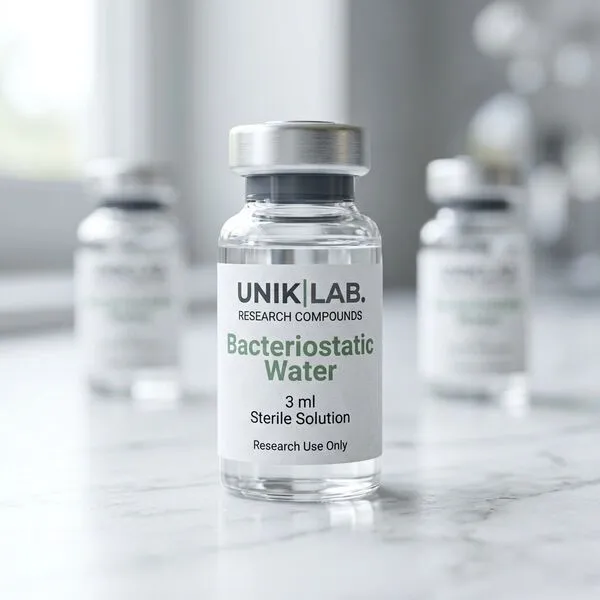
Lyophilised TB-500 should be stored at 2–8°C in sealed vials protected from light and moisture. As a relatively short peptide (approx. 895 Da), it has good stability when properly stored and can remain stable for 18–24 months. Reconstitute in sterile bacteriostatic water; store reconstituted solution at 2–8°C and use within 28 days. Avoid repeated freeze-thaw cycles.
UNIK LAB's TB-500 achieves ≥98% purity by HPLC with mass spectrometry identity confirmation. The LKKTET actin-binding sequence is verified as part of the molecular identity characterisation. A full Certificate of Analysis with HPLC chromatogram, MS data, and batch traceability is provided with each order.
Standard assays include scratch wound (cell migration) assays in fibroblast and endothelial cell monolayers, Matrigel tube formation assays for angiogenesis quantification, Boyden chamber migration assays, actin polymerisation assays using pyrene-actin fluorescence, and ILK kinase activity assays. For mechanistic studies, G-/F-actin ratio quantification by differential centrifugation is a direct measure of thymosin β4's actin-sequestering activity.