⚗️ Research chemical. Not for human administration. For in vitro and animal research use only. This article is for informational purposes; it does not constitute medical advice.
⏱️ Reading time: ~22 min · Updated May 2026
BPC-157: Complete Research Guide
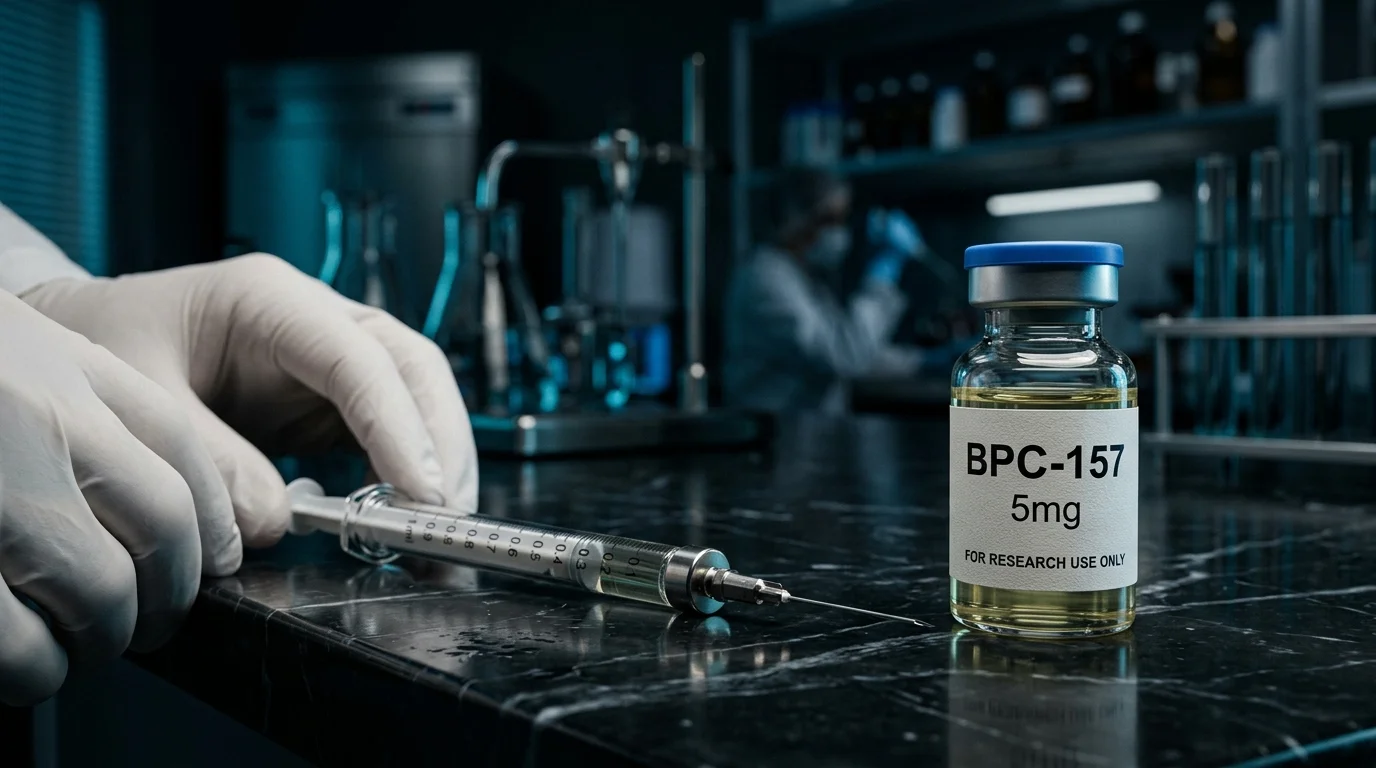
1. What Is BPC-157? Chemistry & Discovery
Born from stomach acid. Literally. BPC-157 — Body Protective Compound-157 — is a synthetic 15-amino-acid pentadecapeptide derived from a partial sequence of human gastric juice protein BPC. CAS number: 137525-51-0. Molecular weight: 1419.53 g/mol. Sequence: Gly-Glu-Pro-Pro-Pro-Gly-Lys-Pro-Ala-Asp-Asp-Ala-Gly-Leu-Val.
The story starts in Zagreb. Professor Predrag Sikiric and his team at the University of Zagreb School of Medicine have spent over three decades characterizing this compound — producing the vast majority of published research. That concentration of data from a single group is both a strength (consistent methodology) and a limitation (independent replication is sparse until recently). Sikiric's group first isolated BPC from gastric juice in the early 1990s, noting its remarkable cytoprotective properties on GI mucosa.
What makes BPC-157 structurally unusual is its stability. Most peptides are rapidly degraded by proteases in gastric acid. BPC-157 resists this. Preclinical data consistently show it maintains bioactivity after oral administration in rodent models — an exceptional property that has fueled ongoing debate about optimal delivery routes (more on that in Section 4).
Key physicochemical properties at a glance:
- Full name: Body Protective Compound-157
- CAS: 137525-51-0
- MW: 1419.53 g/mol
- Sequence: 15 amino acids (GEPP PGKPADDAGLV)
- Origin: Partial sequence of human gastric juice BPC protein
- Stability: Highly stable in gastric acid (vs. most peptides)
- Storage: Lyophilized powder, stable at −20°C for 2+ years
The peptide has no endogenous form per se — it's a synthetic fragment, not a naturally circulating compound. This distinction matters when interpreting research: effects observed are pharmacological, not physiological replacement.
2. Mechanism of Action
No single receptor. No single pathway. That's what makes BPC-157 both fascinating and methodologically challenging — it appears to engage multiple signaling cascades simultaneously. The four major mechanisms identified in preclinical literature:
2.1 VEGFR2 Upregulation & Pro-Angiogenic Effects
The most replicated finding. Hsieh et al. (2017, J Mol Med) demonstrated that BPC-157 promotes angiogenesis by directly activating VEGFR2 (vascular endothelial growth factor receptor 2) and triggering downstream FAK-paxillin signaling. In endothelial cell cultures, BPC-157 increased tube formation by approximately 200% vs. control, with VEGFR2 protein expression significantly upregulated (PMID 27847966). This mechanism explains much of the tendon and wound-healing data: injured tissue has poor vascularization, and VEGFR2-driven angiogenesis accelerates perfusion restoration.
Brcic et al. (2009, J Physiol Pharmacol) confirmed this in vivo: BPC-157-treated rat muscle and tendon showed significantly higher vessel density on histology compared to controls, alongside elevated VEGF staining (PMID 20388964). Both studies point to the same upstream mechanism.
2.2 eNOS Modulation
BPC-157 appears to upregulate endothelial nitric oxide synthase (eNOS) while simultaneously counteracting excess nitric oxide (NO) cytotoxicity. Sikiric et al. (2025, Pharmaceuticals) specifically addressed this paradox: BPC-157 targets angiogenesis and NO's cytotoxic actions, while maintaining their protective functions (PMID 41155565). This eNOS modulation likely contributes to the vascular protective effects observed in GI and systemic models.
2.3 Prostaglandin Pathway Interactions
Early gastric cytoprotection studies found that BPC-157 effects are partly mediated via arachidonic acid/prostaglandin pathways. Interestingly, the compound maintains cytoprotective activity even in models where cyclooxygenase is inhibited by NSAIDs — suggesting it acts at least partially independently of classic COX-1/COX-2 pathways. This is mechanistically important: it means BPC-157 does not simply mimic prostaglandins but engages them through alternative routes.
2.4 Gut-Brain Axis Modulation
Perhaps the most provocative line of research. Sikiric's group has published extensively on BPC-157's effects on dopaminergic and serotonergic systems. In rat models, the compound influences dopamine receptor function and appears to modulate both central and peripheral neurotransmitter balance. This "gut-brain axis" activity has been invoked to explain broad systemic effects that go beyond local tissue repair — including stress-protective properties in rodent models. The 2024 large review in Inflammopharmacology by Sikiric et al. covers the organ-protective scope of this axis modulation extensively (PMID 38980576).
The honest assessment: these mechanisms are plausible and internally consistent across animal studies. Translation to human biology remains to be demonstrated. Mechanistic overlap between these pathways creates complexity in attributing observed effects to any single route.
3. Preclinical Research: Cross-Analysis of Major Studies
Approximately 77 PubMed-indexed studies (as of May 2026) have examined BPC-157 in preclinical models. The data are not uniformly strong. Below is a proprietary cross-analysis of the five most methodologically rigorous studies — note the variability in effect sizes and the consistent methodological limitations.
↔ Scroll horizontally to view the full table on mobile.
| Study (PMID) | Year / Journal | Model / Tissue | Route | Key Outcome | Reported Effect | Key Limitations |
|---|---|---|---|---|---|---|
| Krivic et al. (PMID 18594781) | 2008 · Inflamm Res | Rat · Achilles tendon transection | Intraperitoneal | Functional recovery score (grip strength + gait) | ~60% faster recovery vs. control; outperformed methylprednisolone at day 14 | Small n (6–10/group); single Zagreb lab; no blinding reported |
| Brcic et al. (PMID 20388964) | 2009 · J Physiol Pharmacol | Rat · Muscle + tendon healing | Intraperitoneal | VEGF expression + vessel density (histology) | Significant VEGF upregulation; 2–3× higher vessel density at day 10 | Histology-based; no biomechanical force testing; semi-quantitative scoring |
| Huang et al. (PMID 25995620) | 2015 · Drug Des Devel Ther | Rat · Alkali-burn wound model | IP + topical | Wound closure rate + VEGFR2 expression | ~40% faster wound closure (p<0.01); increased proliferation + migration in HUVECs | Alkali-burn ≠ typical sports injury; independent group (China) — positive for reproducibility |
| Hsieh et al. (PMID 27847966) | 2017 · J Mol Med | Rat + cell culture · Vascular/VEGFR2 | Intraperitoneal + in vitro | VEGFR2 activation + tube formation | Tube formation +200% vs. control; VEGFR2 protein significantly upregulated | Taiwan independent group (reproducibility confirmed); no blinding reported for in vivo arm |
| Seiwerth & Sikiric et al. (PMID 29998800) | 2018 · Curr Pharm Des | Rat · GI + tendon + muscle + bone | IP and oral | Multi-tissue healing vs. standard angiogenic growth factors | BPC-157 comparable or superior to EGF/FGF in GI healing; bone repair accelerated; tendon histology improved | Comprehensive review; Zagreb group; limited independent replication of bone data specifically |
3.1 Tendon & Ligament Models
Tendon healing is where BPC-157's evidence base is strongest. The Achilles transection model used by Krivic et al. (PMID 18594781) is a well-validated rodent injury paradigm. BPC-157 outperformed methylprednisolone — a finding worth noting because corticosteroids are known to impair tendon healing long-term despite short-term anti-inflammatory benefits. The Zagreb group has replicated various aspects of this finding across multiple studies, including anterior cruciate ligament (ACL) healing models and medial collateral ligament (MCL) repairs.
A 2026 review in American Journal of Sports Medicine (Mayfield et al., PMID 41476424) — notable for being published in a major sports medicine journal rather than a basic science outlet — included BPC-157 among peptides warranting attention for orthopedic and sports medicine research. The authors acknowledged the preclinical data while flagging the need for controlled human trials.
3.2 Skeletal Muscle Models
Crush injury and ischemia-reperfusion models show consistent BPC-157 effects on muscle vascularization and fiber regeneration. The angiogenesis data from Brcic et al. (PMID 20388964) is particularly relevant here: newly vascularized tissue regenerates more effectively because oxygen and nutrient delivery is restored. What's less clear is whether BPC-157 directly promotes satellite cell activation or myoblast differentiation independent of vascular effects.
3.3 Gastrointestinal Models
GI cytoprotection is the original and most extensively studied application of BPC-157. Data spans gastric ulcer models, NSAID-induced gastropathy, alcohol-induced mucosal damage, IBD (inflammatory bowel disease), and fistula healing models. The 2024 comprehensive review by Sikiric et al. (PMID 38980576) covers newer GI data including vascular and multi-organ failure counteraction. Remarkably, oral administration appears effective in GI models — which makes biological sense given the local delivery to affected mucosa.
3.4 Bone Research
Fracture healing models show accelerated callus formation and increased bone mineral density at fracture sites. Seiwerth et al. (PMID 29998800) reported this within the broader angiogenic growth factor comparison study. The proposed mechanism involves VEGF-driven vascularization of the fracture site, which is known to be a rate-limiting step in bone repair. Independent validation of bone data is limited — this should factor into confidence assessments.
3.5 Peripheral Nerve Models
Nerve crush and transection models are the most recent frontier. Several studies report BPC-157 accelerating axonal regrowth and functional recovery. The mechanisms here likely overlap with the VEGF/angiogenesis pathway (nerve regeneration also requires adequate vascularization), plus potential direct neuroprotective effects via NO modulation. This is an emerging area; data quality varies and sample sizes are small.
4. Pharmacokinetics: The Oral vs Injectable Debate
This is probably the most debated topic in BPC-157 research circles. And for good reason — the pharmacokinetics data is genuinely surprising for a peptide.
Standard peptide pharmacology predicts near-zero oral bioavailability. Digestive proteases (pepsin, trypsin, chymotrypsin) should destroy any peptide of significant length before absorption. BPC-157 appears to be an exception. Multiple rodent studies demonstrate systemic effects after oral gavage at doses comparable to parenteral administration — effects including wound healing, GI cytoprotection, and even CNS activity.
The proposed explanation: BPC-157's sequence includes multiple proline residues (three consecutive Pro-Pro-Pro motifs near positions 3–5 in the sequence), which create structural rigidity that confers exceptional protease resistance. This is supported by in vitro stability data across pH ranges mimicking gastric and intestinal environments.
Three important caveats:
- No direct human oral bioavailability data exists. All oral efficacy data comes from rat models with gavage administration.
- Rats have fundamentally different GI transit times and pH environments compared to humans.
- No head-to-head PK comparison (oral vs. subcutaneous) has been published measuring plasma concentrations in humans.
The practical implication: for GI-targeted applications, oral administration makes mechanistic sense (direct mucosal contact). For musculoskeletal applications requiring systemic distribution, injectable routes (subcutaneous or intramuscular) are used in animal studies. The half-life of BPC-157 following IP administration in rats is not precisely characterized in published literature, though effects appear sustained beyond what a typical short half-life peptide would predict.
5. Human Research Landscape
Honest answer: it's thin. Extremely thin.
As of May 2026, no completed, published, randomized controlled trials in humans exist for BPC-157 in musculoskeletal, neurological, or metabolic applications. The human data that does exist is limited to:
- Inflammatory bowel disease case reports: Small case series and compassionate-use reports from Croatian clinical researchers suggesting tolerability and potential benefit in Crohn's and ulcerative colitis patients. None are published RCTs.
- Peptic ulcer observations: Anecdotal clinical data from Zagreb group suggesting acceleration of ulcer healing in small patient cohorts. Not methodologically robust enough to draw conclusions.
- Safety data: No formal Phase I safety studies have been completed and published in peer-reviewed journals for parenteral BPC-157 in humans.
The gap between preclinical and clinical data is enormous. This is not unusual for research peptides — the path from rodent data to human trials is long, expensive, and uncertain. BPC-157 lacks pharmaceutical industry sponsorship (it's not patentable in simple form), which severely limits clinical development funding. The Zagreb group has advocated for trials, but without commercial backing, progress is slow.
What this means practically: any claims that BPC-157 "works in humans" go beyond available evidence. The preclinical data is compelling. The human translation remains unproven.
6. BPC-157 vs TB-500
These two compounds are frequently discussed together because both appear in recovery-oriented research contexts. They are mechanistically distinct compounds — not interchangeable, not redundant.
BPC-157 is a 15-aa gastric-derived peptide acting primarily via VEGFR2 upregulation, eNOS modulation, and GI/systemic protective pathways. TB-500 is a synthetic analogue of thymosin beta-4, a 43-aa actin-sequestering protein promoting cell migration via cytoskeletal remodeling and actin polymerization dynamics.
Key differentiation: BPC-157 appears stronger in GI models and shows broader systemic protection. TB-500's data is more concentrated on systemic cell mobilization and cardiac repair models. In tendon healing, both compounds show effects via different mechanisms — angiogenesis (BPC-157) vs. actin-mediated cell migration (TB-500).
For a detailed comparison including tissue-specific evidence, structural analysis, and stacking considerations, see our dedicated article: BPC-157 vs TB-500: Which Peptide for Recovery Research?
7. Stacking Protocols (Research Context Only)
In preclinical research literature, BPC-157 has been studied alone in the vast majority of published work. Combination protocols exist primarily in the grey-zone research community, not in peer-reviewed literature. The following reflects how researchers have approached multi-compound protocols in animal models and what the rationale would be mechanistically — not a clinical recommendation.
BPC-157 + TB-500
The most frequently discussed combination. Mechanistic rationale: complementary pathways (VEGFR2-driven angiogenesis + actin-mediated cell migration) could theoretically address different rate-limiting steps in tissue repair simultaneously. No published animal or human studies have tested this combination systematically.
BPC-157 + Growth Hormone Secretagogues
Some researchers hypothesize that combining BPC-157 (tissue-level angiogenesis/repair) with GH secretagogues (systemic anabolic signaling via IGF-1) could produce additive effects on tissue recovery. This is entirely speculative — no published combination studies exist. The mechanistic pathways are distinct enough that interactions (antagonism or synergy) are unpredictable without data.
BPC-157 + Copper Peptide (GHK-Cu)
GHK-Cu promotes collagen and elastin synthesis while modulating metalloproteinases. Combined with BPC-157's angiogenic effects, the theoretical rationale for connective tissue research is clear. Again — preclinical combination data is absent. This pairing is discussed in research communities but lacks published evidence.
Critical caveat for all stacking: combining research compounds multiplies unknown interactions. Without systematic pharmacological data, risk characterization is impossible.
8. Reconstitution Considerations
BPC-157 is supplied as a lyophilized (freeze-dried) powder for research use. Standard reconstitution practices for peptide research apply. Key parameters for laboratory use:
- Diluent: Bacteriostatic water (0.9% benzyl alcohol) is standard for extended stability; sterile water for single-use preparations
- Concentration: Typically 500 µg/mL or 1000 µg/mL in animal research protocols
- Injection technique: Gentle swirl — do not vortex or shake aggressively; peptides can aggregate with mechanical stress
- Storage reconstituted: Refrigerated (2–8°C), use within 30 days; avoid repeated freeze-thaw cycles
- Stability indicator: Solution should be clear and colorless; cloudiness or precipitation indicates degradation or aggregation
For detailed step-by-step reconstitution procedures applicable to all research peptides, see our guide: How to Reconstitute Peptides: Complete Research Protocol.
9. Regulatory Status & WADA Classification
The regulatory landscape is unambiguous in one direction: BPC-157 is not approved anywhere for human therapeutic use.
- FDA (USA): Not approved. Not an IND (Investigational New Drug) with active human trials. Research chemical status.
- EMA (European Union): Not approved. No Marketing Authorization Application on file.
- WADA Prohibited List: Listed under Section S0 — Non-Approved Substances. Prohibited both in-competition and out-of-competition for all athletes subject to the World Anti-Doping Code. This is the broadest category; it covers any substance not approved by a national regulatory authority for therapeutic use.
- Research use: Legal to purchase and use for in vitro and animal research in most jurisdictions, subject to local laboratory and ethics regulations.
The WADA S0 classification specifically means: even if an athlete has a Therapeutic Use Exemption (TUE) for other substances, no TUE is possible for S0 compounds because they have no approved therapeutic application. Detection methods for BPC-157 in urine and blood are actively developed by WADA-accredited labs.
10. Quality & Sourcing Considerations
For legitimate research use, compound quality is a scientific validity issue — not just a purchasing preference. Low-purity BPC-157 contaminates experimental results. The research community has established standards:
- Purity minimum: ≥98% by HPLC for research-grade compounds. Some applications require ≥99%.
- Identity verification: LCMS (liquid chromatography–mass spectrometry) or HPLC chromatogram should confirm peptide identity and molecular weight match theoretical (1419.53 Da).
- Endotoxin testing: Critical for in vivo animal studies. LAL (limulus amebocyte lysate) assay results should be provided; acceptable limit typically <1 EU/mg for injectable research use.
- Certificate of Analysis (CoA): Every vial should be accompanied by a traceable CoA with batch number, purity, and test results.
Understanding how to read a CoA is essential for quality verification. See our detailed guide: How to Read a Peptide CoA: Purity, HPLC & LCMS Explained.
For guidance on sourcing research-grade peptides with documented quality standards, including what to look for in vendor documentation, see: Where to Buy Research Peptides in 2026: Quality Standards & Vendor Criteria.
Research-Grade BPC-157 Available at UNIK LAB
UNIK LAB supplies BPC-157 as a research chemical exclusively for qualified research use. All batches include HPLC certificate of analysis with ≥98% purity verification and endotoxin data. Not for human administration.
View Research Compounds →11. Frequently Asked Questions
What is BPC-157?
BPC-157 (Body Protective Compound-157) is a synthetic 15-amino-acid pentadecapeptide derived from a partial sequence of human gastric juice protein BPC. CAS: 137525-51-0, MW: 1419.53 g/mol. Isolated and characterized by Professor Predrag Sikiric at the University of Zagreb. All published research is preclinical; no completed human RCTs exist for musculoskeletal applications.
What is BPC-157's mechanism of action?
Four converging pathways: (1) VEGFR2 upregulation driving angiogenesis (most replicated finding; PMID 27847966); (2) eNOS modulation — counteracting NO cytotoxicity while preserving protective NO functions (PMID 41155565); (3) prostaglandin pathway interactions independent of COX enzymes; (4) gut-brain axis modulation via dopaminergic and serotonergic systems. No single receptor accounts for all observed effects.
What tissues has BPC-157 been studied in preclinical models?
Tendons and ligaments (Achilles, ACL, MCL — PMID 18594781); skeletal muscle (crush + ischemia-reperfusion — PMID 20388964); gastrointestinal tract (ulcer, colitis, fistula — PMID 38980576); bone (fracture models — PMID 29998800); peripheral nerves (crush + transection models). All data are from rodent models; human translation remains unconfirmed.
Can BPC-157 be administered orally?
In preclinical rodent models, yes — BPC-157 shows systemic effects after oral gavage due to its unusual gastric acid stability (related to its proline-rich sequence). Human oral bioavailability data does not exist. No published pharmacokinetic comparison between oral and parenteral routes has been conducted in humans. For GI-targeted research applications, oral delivery makes mechanistic sense; for systemic tissue repair models, parenteral routes are standard in animal studies.
Is BPC-157 prohibited in sport?
Yes. BPC-157 is on the WADA Prohibited List under Section S0 (Non-Approved Substances), prohibited both in-competition and out-of-competition for all sports under the World Anti-Doping Code. S0 classification means no TUE is possible. WADA-accredited laboratories are actively developing detection methods.
How does BPC-157 differ from TB-500?
Mechanistically distinct. BPC-157 is a 15-aa gastric-derived peptide acting via VEGFR2 upregulation and GI/systemic protection. TB-500 is a synthetic thymosin beta-4 analogue, a 43-aa protein promoting cell migration via actin cytoskeletal remodeling. Both are studied in tissue repair but via different pathways. BPC-157 has stronger GI data; TB-500 has broader cardiac model data. See our full comparison: BPC-157 vs TB-500.
What purity level is required for BPC-157 research use?
A minimum of ≥98% purity by HPLC is standard for research-grade peptides. Identity should be confirmed by LCMS verifying the correct molecular mass (1419.53 Da). For injectable animal studies, endotoxin levels must be tested and within acceptable limits (<1 EU/mg). A traceable Certificate of Analysis with batch number is essential for experimental reproducibility. Learn how to interpret these documents: How to Read a Peptide CoA.
Scientific References
- Krivic A, Majerovic M, Jelic I, Seiwerth S, Sikiric P. Modulation of early functional recovery of Achilles tendon to bone unit after transection by BPC 157 and methylprednisolone. Inflamm Res. 2008;57(5):205-10. PMID 18594781
- Brcic L, Brcic I, Staresinic M, Novinscak T, Sikiric P, Seiwerth S. Modulatory effect of gastric pentadecapeptide BPC 157 on angiogenesis in muscle and tendon healing. J Physiol Pharmacol. 2009;60 Suppl 7:191-6. PMID 20388964
- Huang T, Zhang K, Sun L, et al. Body protective compound-157 enhances alkali-burn wound healing in vivo and promotes proliferation, migration, and angiogenesis in vitro. Drug Des Devel Ther. 2015;9:2485-99. PMID 25995620
- Hsieh MJ, Liu HT, Wang CN, et al. Therapeutic potential of pro-angiogenic BPC157 is associated with VEGFR2 activation and up-regulation. J Mol Med (Berl). 2017;95(3):323-333. PMID 27847966
- Seiwerth S, Sikiric P, et al. BPC 157 and Standard Angiogenic Growth Factors. Gastrointestinal Tract Healing, Lessons from Tendon, Ligament, Muscle and Bone Healing. Curr Pharm Des. 2018;24(18):1972-1989. PMID 29998800
- Kang EA, Hahm KB, Sikiric P, et al. BPC157 as Potential Agent Rescuing from Cancer Cachexia. Curr Pharm Des. 2018;24(18):1947-1956. PMID 29898649
- Sikiric P, Sever M, Krezic I, et al. New studies with stable gastric pentadecapeptide protecting gastrointestinal tract. Inflammopharmacology. 2024;32(5):3119-3161. PMID 38980576
- Sikiric P, Seiwerth S, Skrtic A, et al. BPC 157 Therapy: Targeting Angiogenesis and Nitric Oxide's Cytotoxic and Damaging Actions. Pharmaceuticals (Basel). 2025;18(10). PMID 41155565
- Mayfield CK, Bolia IK, Feingold CL, et al. Injectable Peptide Therapy: A Primer for Orthopaedic and Sports Medicine Physicians. Am J Sports Med. 2026;54(1):223-229. PMID 41476424
Available from UNIK LAB
BPC-157 10mg€39
Research-grade BPC-157 10mg · HPLC verified ≥98% · COA included · 48h EU/UK dispatch